Common tree diseases affecting Winnipeg yards - Tree care advice and how to catch signs of sickness early (updated Oct 2026)
How To Maintain Tree Health and Enhance Your Trees Lifespan In Winnipeg
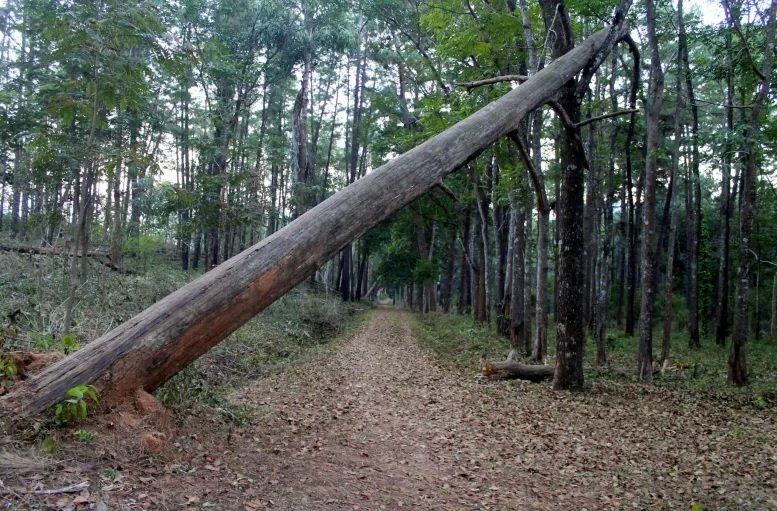
Trees are a major part of what makes properties in Winnipeg beautiful, private, and valuable. Our connection with nature is a huge part of our community and culture. But our unique prairie climate with long winters, humid summers, and strong winds can create the perfect environment for certain tree diseases, pest, and mite issues.
If you’re a homeowner in the Winnipeg area, knowing what to watch for can help you catch issues early and avoid costly removals later. This post aims to provide you with some advice and ideas of how to better protect your trees throughout the year!
Here’s a practical guide to the most common tree diseases and tree health threats in Winnipeg along with some of the warning signs you shouldn’t ignore.
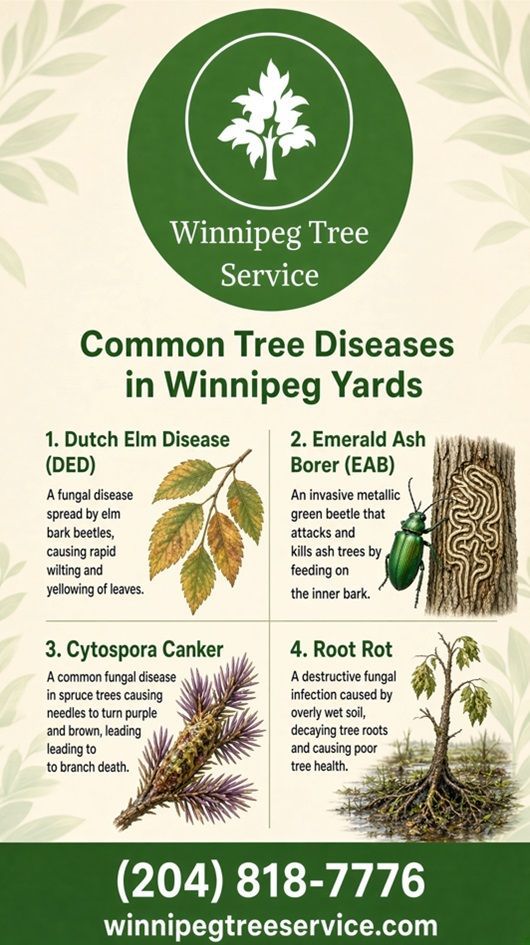
1. Dutch Elm Disease (DED)
One of the most serious threats to Winnipeg’s forest ecosystem.
Elm trees are iconic in many older Winnipeg neighborhoods, but Dutch Elm Disease has devastated populations across Manitoba for decades.
What Causes It?
A fungus spread by elm bark beetles that blocks the tree’s water-conducting system.
Early Signs To Look Out For:
- Leaves turning yellow, then brown, starting at the top of the tree
- Wilting branches in late spring or early summer
- Rapid leaf drop
- Brown streaking under the bark
DED spreads quickly and is often fatal. Infected trees typically require prompt removal to prevent spreading to nearby elms. stay on the lookout for infected trees and if you are unsure of what to look for or if your trees are infected give us a call and we can assess the situation for you!
2. Emerald Ash Borer (EAB)
Ash trees are common throughout Winnipeg and unfortunately, highly vulnerable to Emerald Ash Borer.
What It Is:
Ash borer is an invasive beetle that lays eggs under ash tree bark. The larvae tunnel through the tree, cutting off nutrients. Initially native to north-eastern Asia, but have since migrated here with the transport of exotic plants.
Early Warning Signs:
- Thinning branches at the top of the tree
- Small D shaped exit holes in the bark
- Increased woodpecker activity
- Sprouts growing from the trunk base
- Bark split and tearing
Untreated infestations almost always lead to tree death within a few years. Early detection may allow for treatment in some cases, but heavily infested trees often need removal just like with DED.
3. Cytospora Canker (Common in Spruce Trees)
If you have mature spruce trees in your yard, this fungal disease is something to watch for.
What To Watch For:
- Lower branches dying first
- Needles turning purple, then brown
- White or bluish sap oozing from branches
This disease often targets stressed trees. Proper watering, pruning, and overall maintenance can help prevent infection.
4. Root Rot
Winnipeg’s spring melt and heavy rainfall can create overly damp soil, perfect conditions for root rot to fester.
Be On The Lookout For:
- Sudden leaf yellowing
- Wilting despite adequate watering
- Mushrooms growing near the trunk
- Soft or spongy wood or soil at the base
Root rot is a dangerous disease because it weakens the trees structural stability. In severe cases, trees can become hazardous and prone to falling.
Why Early Detection Saves Money
Catching tree diseases early can mean:
- Lower treatment costs
- Preventing spread to nearby trees
- Avoiding emergency removals
- Protecting your property from falling hazards
Many tree problems start subtly. By the time major damage is visible, internal damage may already be too extensive to treat.
Contact a tree service specialist if you notice anything from sudden leaf discoloration that is out of season, to multiple dead branches or decay near the base of the tree. These can all be early signs of insect infestation or tree disease.
A professional inspection from a certified arborist can determine whether the tree can be treated, pruned, or needs to be safely removed. For such inspections, feel free to contact us. In the busy season when we're booked up for months, we also recommend our friends at Affordable Tree & Stump Experts Inc.
Prevention is just as important as treatment. There are several ways homeowners can reduce the risk of rot and disease. Avoiding overwatering, excessive pruning, not removing dead branches, and most importantly, not stacking firewood up against live trees (I know I was guilty of this in the past).
Healthy trees increase curb appeal, provide shade, and improve property value, but only if they’re properly maintained. If you have any further questions about prevention of tree disease, tree removal, tree pruning, or anything else, contact us at (204) 818-7776. We hope this helps you take better care of your trees!
Ready to work with Winnipeg Tree Service?
Let's connect! We’re here to help.
Send us a message and we’ll be in touch.
Or give us a call today at (204) 818-7776
Winnipeg Tree Service
More From Us
The Tree Service Winnipeg Blog made by Winnipeg Tree Service